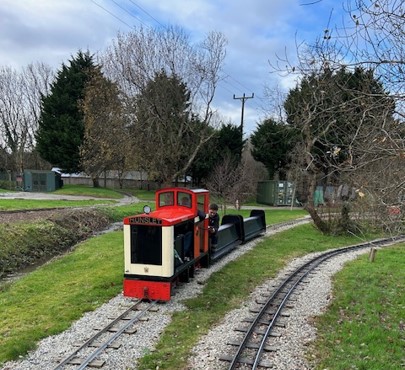
Seaton Trams
Claude Lane led to a one-off summer season at St. Leonards, Sussex, in 1951 and then the first of five seasons at Rhyl from 1952. These ventures persuaded Lane to negotiate the lease on a permanent site at Eastbourne in 1953, and Modern Electric Tramways Ltd was born.
After a number of locations the tramway came to a small town in East Devon, Seaton where it has been running since the early 1970's
With the rapid growth in visitor numbers (Seaton Tramway carries over 100,000 visitors a year) it has become one of East Devon's popular attractions.
Due to the age of the trams maintaining them has become harder each year mainly due to obsolesce of critical components.
After a number of meetings Lynch Motor Company Ltd offered a solution that we could create a bespoke drive system and ensure it all fits within the original castings allowing the trams to maintain the original looks but now powered using the latest technology
The first Tram is the maintenance vehicle which will allow Lynch and Seaton Trams to monitor the progress over the coming months with views to converting additional trams over time.
Maintenance Tram

Working closely with Seaton Trams Lynch took our latest design and created a bespoke drive system the constraints being fiscal size. Due to the unique design of the Lynch Motors we offered a high performance Axial Flux brushed motor along with developing a complete control solution ensuring the tram maintained the original designs.
Further details of Seatin Trams can be found using the link below
Why use a Lynch Electric Motor for your miniature railway or leisure ride
The Lynch Electric Motor, also known as the Pancake Motor, is a popular choice for miniature railways and leisure rides due to its unique features and benefits. Here's why it stands out:
> High Efficiency - Lynch motors operate at a high efficiency (up to 90% in some cases), reducing energy costs.
> High Torque at Low Speeds - Powerful Start-Up and steady performance.
> Quiet Operation - Low noise pollution for enhanced passenger experience
> Low Maintenance - Durable construction and fewer moving parts
> Environmentally friendly - Zero emissions
> Easy Installation & Integration with a variety of power sources
> Cost effective - low running costs
A Lynch Electric Motor is an excellent choice for miniature railways and leisure rides due to its compact size, high efficiency, reliability, and environmental benefits. It ensures smooth and quiet operation, enhancing both performance and passenger experience. Whether you're designing a small railway for a park or a leisure ride for a theme attraction, the Lynch motor provides a dependable and cost-effective solution.
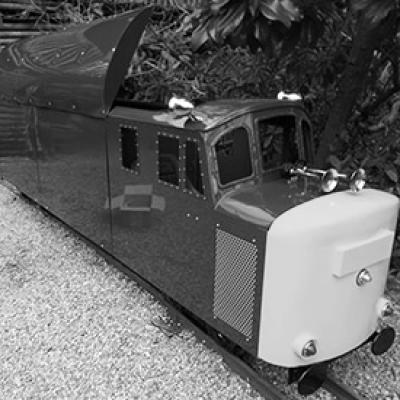
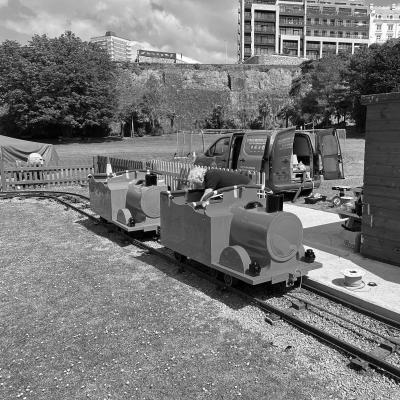
Miniature Railway & Leisure Ride Case Studies

Electric Miniature Railway & Leisure Rides FAQs
Why use electric motors in miniature trains and fairground rides?
Electric motors provide smooth, quiet, and efficient operation, making them ideal for attractions where reliability, low maintenance, and a good passenger experience are essential. They also offer eco-friendly performance with zero emissions.
What types of electric motors are used in miniature trains and fairground rides?
- DC Motors: Common for their simplicity and controllability.
- Brushless DC Motors (BLDC): Provide high efficiency and low maintenance.
- AC Motors: Robust and suitable for larger, heavier rides.
- Servo Motors: Offer precise control, ideal for complex movement in fairground rides.
Lynch Motors are brushed DC Motors.
What are the advantages of using electric motors in miniature railways and fairground rides?
- Efficiency: High energy efficiency reduces operational costs.
- Quiet Operation: Minimizes noise, enhancing passenger comfort.
- Smooth Performance: Ensures consistent motion and eliminates jerky starts/stops.
- Eco-Friendly: Zero emissions when powered by batteries or renewable energy.
- Low Maintenance: Fewer moving parts compared to combustion engines.
How are electric motors powered in miniature trains and rides?
- Batteries: Rechargeable batteries provide mobility and flexibility.
- Grid Power: Directly powered through connections at stationary rides.
- Renewable Sources: Solar panels or wind turbines can be integrated for sustainable energy.
Are electric motors suitable for outdoor use?
Yes, but they must be appropriately weatherproofed with:
- Sealed Enclosures: Protect motors from moisture and dust.
- Temperature Management: Cooling systems or materials for extreme conditions.
- Corrosion Resistance: Ensures longevity in wet or humid environments.
Can existing miniature trains be retrofitted with electric motors?
Yes, many miniature trains can be converted to electric propulsion. Retrofitting involves:
- Removing the existing engine or propulsion system.
- Installing an electric motor and compatible power source.
- Configuring speed controllers and braking systems.
Are electric motors powerful enough for steep inclines?
Yes, high-torque motors, such as brushless DC motors or gear-motors, can handle steep inclines effectively. Proper motor selection and gearing are crucial for optimal performance.
How are electric motors controlled in fairground rides?
- Controllers: Regulate speed, torque, and direction.
- Programmable Logic Controllers (PLCs): Used for complex, automated movements.
- Remote Controls: Allow operators to control the ride from a distance.
What role do Lynch electric motors play in these applications?
Lynch electric motors (pancake motors) are highly efficient, compact, and provide excellent torque. They are a popular choice for miniature railways and leisure rides due to their reliability, quiet operation, and low maintenance requirements.